Treatment
MBST nuclear magnetic resonance therapy in Linz
MBST uses the same physical effect as magnetic resonance imaging (MRI). Metabolic processes in cartilage, bone and tendons are stimulated. The treatment is painless.
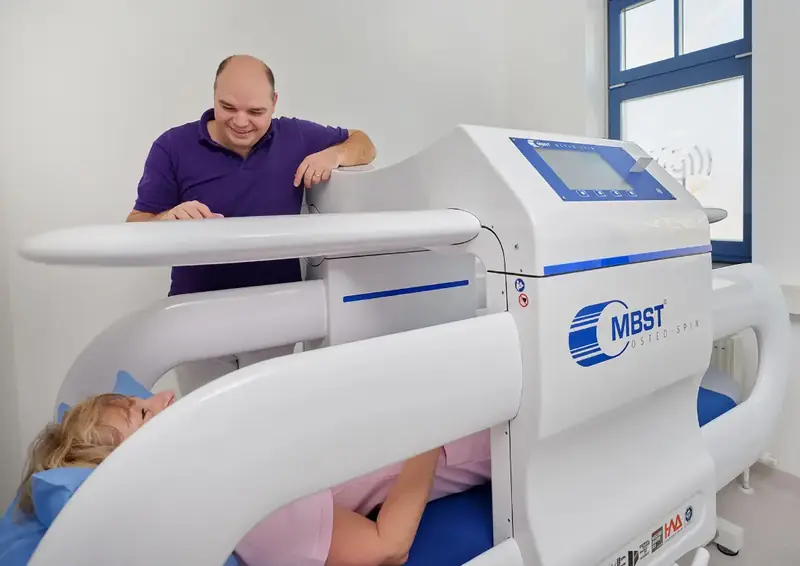
When is MBST therapy useful?
- Osteoarthritis and cartilage damage
- Bone marrow oedema
- Osteopenia and osteoporosis, as a whole-body treatment with OSTEO SPIN®
- Tendon injuries, recent or long-standing
- Spinal and disc problems
- Bone metabolism disorders such as Osgood-Schlatter disease
How the treatment works
- Consultation and examinationBased on your reports, we check whether MBST makes sense for you.
- Course of treatmentSeveral sessions on consecutive days.
- Follow-upThe effect develops over weeks to months, followed by a check-up.
Patient information to download
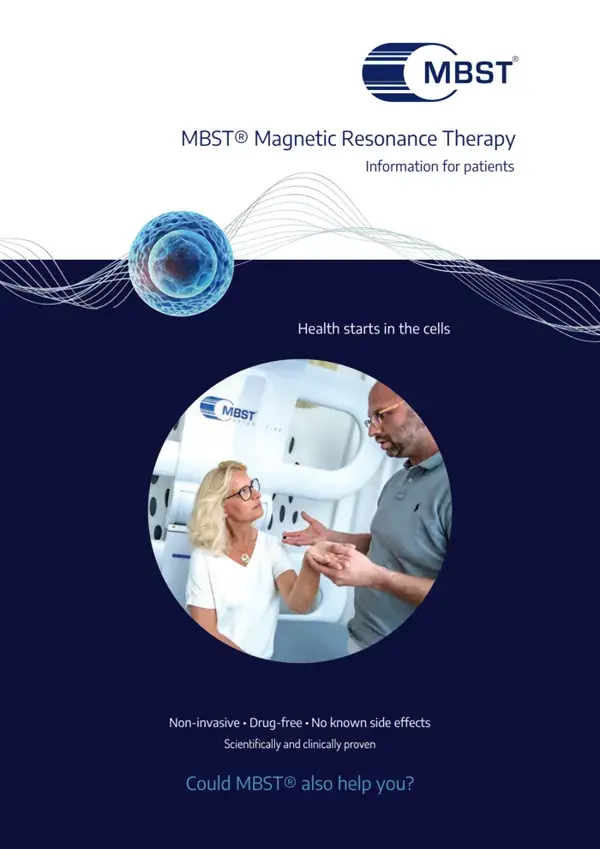
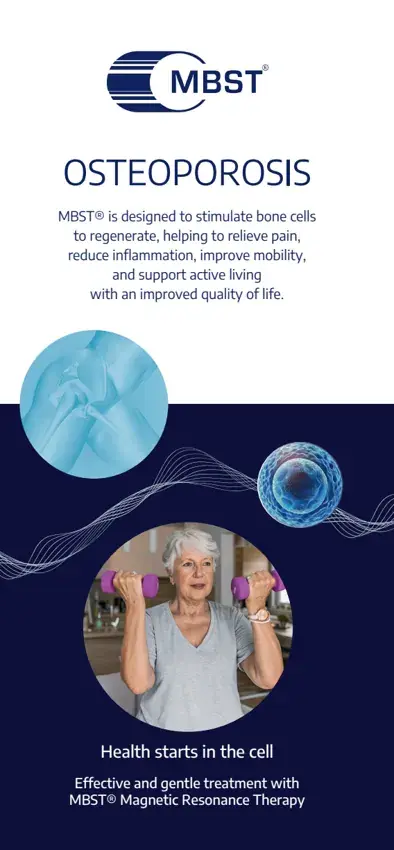
Everything about MBST therapy and the treatment of osteoporosis, to read and print.
- MBST Magnetic Resonance Therapy: information for patientsOpen PDF Deutsche Version
- MBST for osteoporosis (OSTEO SPIN)Open PDF Deutsche Version
Frequently asked questions
Who is MBST not suitable for?
People with implants that are not MRI-compatible, during pregnancy and with tumours. Whether the treatment is possible for you is clarified in detail at the first consultation.
How many sessions are needed?
That depends on the body region and diagnosis. You receive the treatment plan and costs in writing before you start.
Does insurance pay for MBST?
Austrian public insurance usually does not. Some private insurers contribute.
Medically reviewed by Dr. med. Kalojan Petkin, specialist in orthopaedics and traumatology, Linz. Last updated: October 2026.
Book an appointment
Online around the clock, or by phone Monday to Friday.